
Factory Planning•2026-10-15•Tasneem Editorial Desk
Textile Machinery Installation & Commissioning Checklist for Bangladesh Factories
A complete installation and commissioning checklist for textile machinery in Bangladesh factories: foundation, leveling, electrical, trial runs, SAT, operator training, and handover documents.
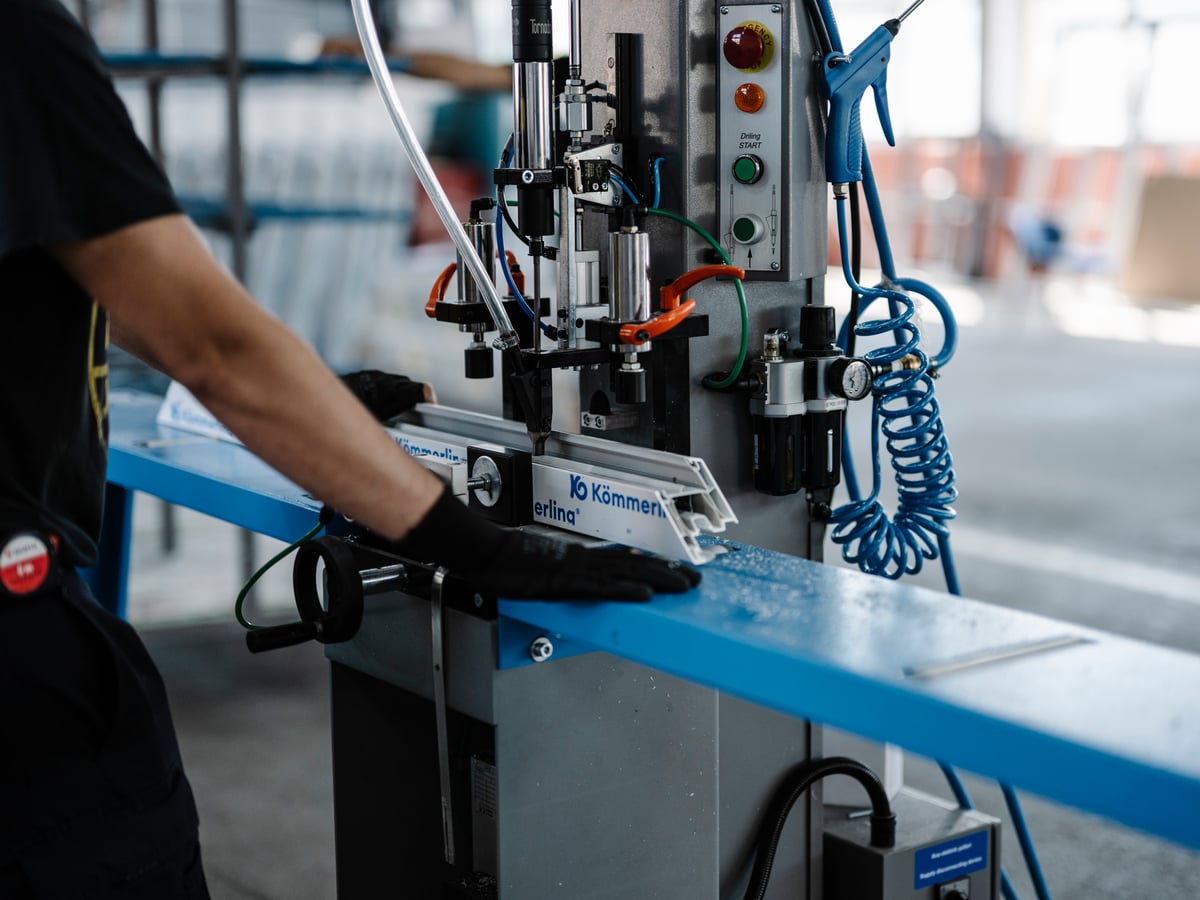
Direct answer (62 words): A textile machinery installation and commissioning checklist sequences six phases: site readiness (foundation, utilities), mechanical installation with precision leveling, electrical and compressed-air hookup, dry-run testing, trial production under a documented Site Acceptance Test (SAT), and operator training with handover documents. Skipping phases — especially leveling verification and the SAT — is the most common cause of premature breakdowns in Bangladesh knitting factories.Foundation: Verify concrete plinth dimensions, thickness, and curing time against the manufacturer's layout drawing. Industrial practice holds leveling tolerance to ±0.2–0.4 mm per meter (API 686) — mandatory for a knitting machine's rotating cylinder.
Floor loading: Confirm the combined weight of machine, operators, and yarn creels stays within the floor's rated capacity. See our floor layout and electrical load guide.
Utilities: Match voltage, phase sequence, earthing resistance, and compressed-air pressure and flow against the manufacturer's specification sheet.
Environment: Stabilize knitting-floor temperature and humidity before commissioning — trial results are meaningless in an unstable environment. Details in our humidity control guide. Uncrate and reconcile parts against the packing list; photograph and document any transit damage.
Position the machine on the foundation center lines; level on both axes with a precision spirit level.
Verify final level before tightening anchor bolts — torquing can distort the frame.
Sign the leveling record; this document is your evidence in any future warranty claim. Verify main isolator, breaker ratings, and cable sizes against the drawings.
Confirm rotation direction with a phase-sequence meter — reversed phases can drive motors backward and cause mechanical damage.
Test earthing continuity; VFD/inverter drives demand a clean earth.
Fit filter-regulator-lubricator (FRL) units on air lines and pressure-test for leaks. Agree trial terms in writing first: yarn count, target GSM, RPM, run duration, and acceptable defect rates.
Measure real output: compare actual production (kg/hour) against theoretical capacity — see how to calculate production capacity.
Defect rates: barre, needle lines, and drop stitches must stay within agreed limits.
Sign-off: commissioning is complete only when both parties sign the SAT report — a verbal "all good" is not acceptance. Separate training sessions for operators, shift in-charges, and the maintenance team; sign attendance sheets.
Handover package: operation manual, electrical drawings, spare-parts list, lubrication chart, SAT report, and warranty card.
Fix the date for a 30-day follow-up visit in advance. Starting up without leveling — "we'll fix it later" never happens.
Releasing final payment without SAT — once paid in full, the supplier's accountability ends.
Untrained operators — wrong settings break needles in the first week.
No documentation — without leveling records and SAT reports, warranty claims collapse.
Ignoring humidity — a machine commissioned in monsoon behaves differently in winter; keep the environment stable.
Why commissioning decides your first year of output
A circular knitting machine rotates 24 hours a day — thousands of revolutions daily. A 1 mm leveling error at installation becomes broken needles, cam wear, and fabric defects within months. In Bangladesh, the SEIP (Skills for Employment Investment Program) competency standard for circular knitting machine operation lists machine setup, operation, and maintenance as distinct skills — installation is an engineering process, not just "placing a machine." A well-commissioned machine reaches stable efficiency in its first year; a rushed installation taxes the factory for years.Phase 1: Site readiness before the machine arrives
Prepare the site while the machine is still at port — not after delivery:Phase 2: Mechanical installation and leveling
Phase 3: Electrical and compressed-air hookup
Phase 4: Dry run and no-load testing
Run the machine without yarn (cold run): exercise every control-panel function, emergency stop, sensor, and safety interlock one by one. Log abnormal noise, vibration, or temperature. Per industry commissioning practice (e.g., Control Design's machinery commissioning guidance), I/O checkout is done line by line so field wiring matches the electrical schematic.Phase 5: Trial production and Site Acceptance Test (SAT)
The SAT is a jointly signed test between buyer and supplier — the FAT (Factory Acceptance Test) happens at the manufacturer's plant; the SAT happens on your floor:Phase 6: Operator training and handover documents
Common commissioning failures in Bangladesh factories
FAQs
What is the difference between FAT and SAT?
The FAT (Factory Acceptance Test) happens at the machine builder's plant before shipment — it verifies the machine was built to specification. The SAT (Site Acceptance Test) happens on the buyer's floor after installation — it verifies the machine delivers promised output in real conditions. Both should be written and signed.How long does commissioning take?
Typically 3–7 days for one circular knitting machine: 1–2 days for installation and leveling, 1 day for electrical and dry run, 2–3 days of trial production and SAT, 1 day of training. Poor site readiness can double the timeline.How precise must leveling be?
Industrial practice for rotating machinery is ±0.2–0.4 mm per meter (per API 686). A knitting cylinder spins at thousands of RPM — greater deviation increases vibration, needle wear, and fabric defects.What gets measured in a SAT?
Actual production rate against target yarn count and GSM, defect percentages (barre, needle lines, drop stitches), power draw, noise levels, and safety-system function. Acceptable limits for each must be agreed in writing before the SAT.What is the most neglected part of commissioning?
Documentation. Most factories start the machine but never file the leveling record, SAT report, or training sheets — leaving zero evidence when a warranty claim or dispute arises.Sources: API 686 machinery installation standard (leveling tolerances); MapTrack equipment commissioning checklist (phased verification structure); Control Design machinery commissioning guidance (I/O checkout and dry-cycle); Bangladesh SEIP circular knitting machine operation competency standard.Related Topics
textile machinery installationmachine commissioning checklistfactory setup Bangladeshsite acceptance testইনস্টলেশন চেকলিস্টকমিশনিং গাইড
Need Technical Sourcing Assistance?
Request Machine QuoteConfigure Your Mill's Circular Knitting Line
Factory-direct pricing, CFR Chattogram delivery, pre-shipment quality audit, and local commissioning in Bangladesh.