
Factory Planning•2026-10-25•Tasneem Editorial Desk
Bangladesh Knitwear Factory Machinery Upgrade Roadmap: A Phased Plan for Export Mills
A phased machinery upgrade roadmap for Bangladesh knitwear factories: audit quality, uptime and energy per kilogram first, fix maintenance and controls, replace the worst machines, then add digital monitoring.
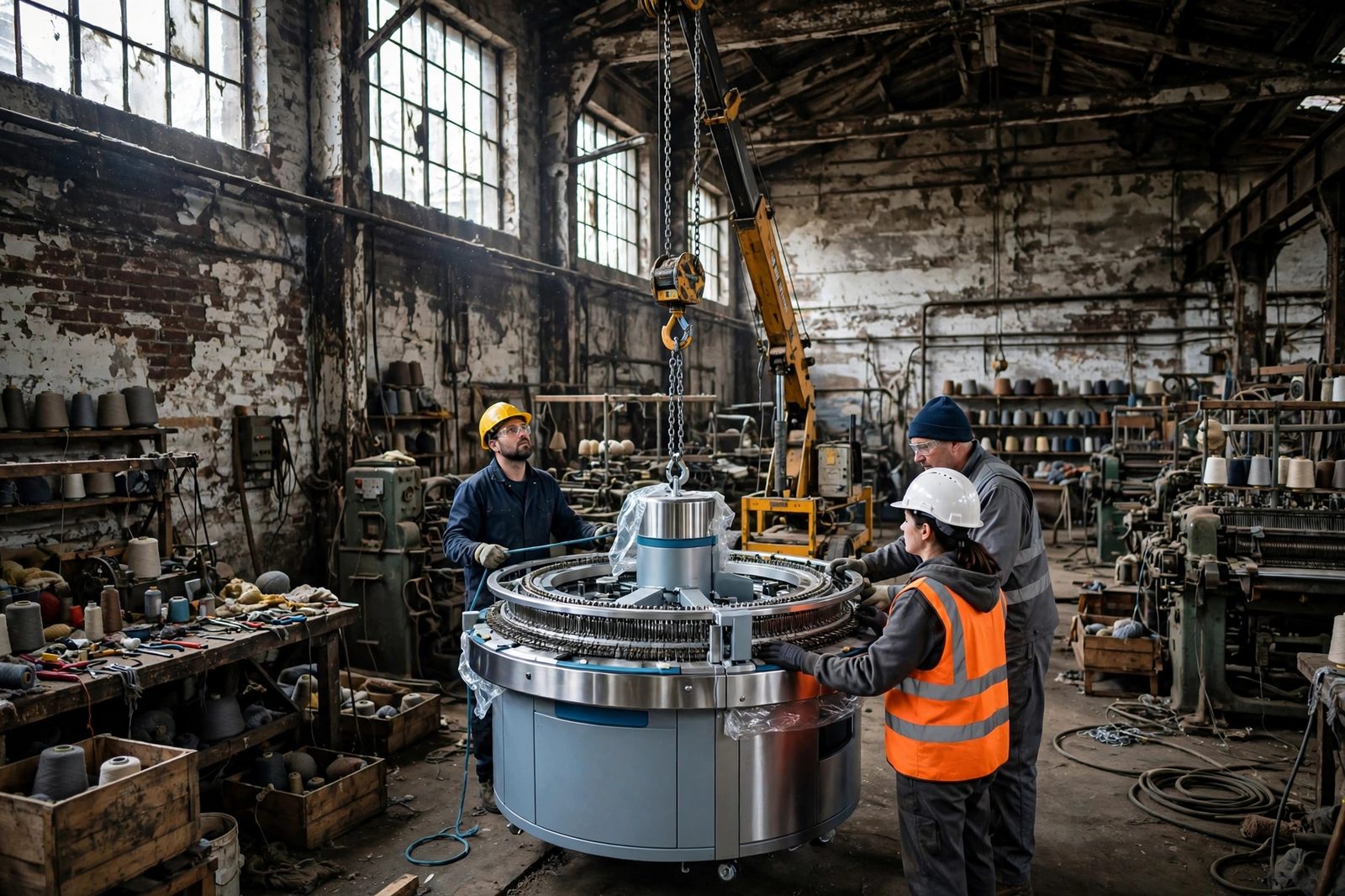
Bangladesh Knitwear Factory Machinery Upgrade Roadmap
Direct answer: A knitwear factory machinery upgrade roadmap is a phased plan that replaces or retrofits circular knitting machines in order of proven loss, not age alone. Start with a baseline audit of quality, uptime and energy per kilogram, fix maintenance and controls first, then replace the worst-performing machines, and only then add digital monitoring across the floor.Why a roadmap beats buying machines one by one
Bangladesh's readymade garment sector earned USD 38.23 billion in fiscal 2024-25, according to Export Promotion Bureau (EPB) data reported by The Financial Express, and knitwear remains roughly half of that total. In a market that large, buyers do not reward the factory with the newest machines; they reward the factory that ships on time, holds GSM and shade, and keeps second-quality rates low. A machine bought without a plan often solves the wrong problem: a new cylinder cannot fix yarn tension faults, and a faster machine only makes defects faster when maintenance is weak.A roadmap forces the opposite order. It measures where money is actually being lost — in rejected fabric, in idle hours, in kilowatt-hours per kilogram — and spends on the loss that is biggest first. That discipline is what makes an upgrade defensible to owners, banks and buyers alike.Phase 0: Measure before you spend (weeks 1–4)
No machine should be ordered before a four-week baseline exists. For each machine, record machine efficiency (actual output against theoretical output at set speed), second-quality percentage, stoppages by cause, and energy consumption per kilogram of greige fabric. Energy per kilogram is the right unit: it lets a 30-inch single jersey machine and a 34-inch interlock machine be compared fairly, and it matches the energy performance indicators (EnPIs) approach of ISO 50001, the international energy management standard.Walk the floor with the same discipline as a preventive maintenance schedule: check needle and sinker condition, cam wear, feeder tension, take-down settings and humidity. Knitting under ISO 139 standard atmosphere conditions — 20 degrees Celsius and 65 percent relative humidity — is the reference point for testing; a floor that swings far from it will chase phantom quality problems. The audit output is a ranked loss list, and that list, not a supplier catalogue, becomes the roadmap.Phase 1: Quick wins on the machines you already own (months 1–3)
Most Bangladeshi knitting floors recover measurable output without buying a single machine. Tighten the maintenance routine, standardise needle and sinker change intervals, calibrate take-down pressure evenly across feeders, and stabilise yarn tension. A structured yarn tension troubleshooting routine belongs here: tension faults are among the cheapest defects to fix and the most expensive to ignore.Energy quick wins come next. Variable-frequency drives (VFDs) on motors that run at part load, disciplined shutdown of idle machines, and fixing compressed-air leaks all cut kilowatt-hours per kilogram before any capital is spent. Before sizing any drive, work through a power consumption calculation for the machine in question, so savings are predicted from real load data rather than a brochure figure.Phase 2: Replace the worst machines first (months 3–12)
Only now does new iron enter the plan, and it enters one bottleneck at a time. The first candidates are machines with the highest combined score of second-quality rate, downtime and energy per kilogram. When specifying replacements, match gauge and cylinder diameter to the fabric programme the factory actually sells — a gauge selection guide prevents the classic error of buying versatility the order book never uses.Modern servo direct-drive circular knitting machines replace gear transmission with direct drive, cutting mechanical loss; industry technical reviews report weaving speed gains of roughly 15 to 30 percent from this change, alongside lower noise and energy use. Treat such figures as a starting point for a trial, not a promise: insist on a test run on the factory's own yarn and fabric, measured against the Phase 0 baseline, before committing to a full line. Plan the swap machine by machine, never a whole floor at once, so production and cash flow are never both interrupted.Phase 3: Connect the floor (months 6–18)
Digital monitoring only pays once the machines themselves are stable. Fit production monitoring to the upgraded machines first: output per shift, stoppage causes, and energy per kilogram on one dashboard. This is where overall equipment effectiveness (OEE) becomes useful — availability multiplied by performance multiplied by quality — because it turns three separate arguments (maintenance, speed, defects) into one number the whole management team can act on.Resist buying software that the floor cannot feed. If stoppage causes are still recorded on paper inconsistently, fix the recording habit before the dashboard. A single accurate OEE figure for ten machines beats ten dashboards nobody trusts.Phase 4: People, spares and commissioning discipline
Every upgrade phase fails without its human half. Operators need training on the new drive, feeder and control settings before the machine enters production, not after the first defect appears. Spare parts policy must change with the fleet: new machines need their own critical-spares list, and old machines approaching retirement should not accumulate fresh stock. Follow a formal installation and commissioning checklist for every machine that arrives, with foundation, levelling, earthing and first-rotation checks signed off before handover.What not to upgrade first
Do not start with the showpiece machine, the one whose brochure impressed the owner. Do not buy capacity for orders that do not exist yet. Do not add a new fabric programme and a new machine type in the same month — when defects appear, nobody will know which change caused them. And do not judge an upgrade by speed alone: a machine running 10 percent faster while making 5 percent more seconds has moved the factory backwards.A realistic timeline for a mid-size floor
For a floor of 10 to 20 machines, a sensible horizon is 12 to 18 months: one month of audit, one quarter of quick wins, two quarters of staged replacement, and digital monitoring layered on top as machines stabilise. Re-audit energy per kilogram and second-quality rates every quarter and re-rank the loss list; the roadmap is a living document, and the machine that was third priority in January may be first by June.FAQs
How do I know whether to retrofit or replace a knitting machine?
Retrofit when the frame, cylinder and drive train are sound and the loss comes from controls, feeders or motors — a VFD, a feeder upgrade or a drive change can recover it. Replace when second-quality rates stay high after proper maintenance, when spares are unavailable, or when energy per kilogram is far above the floor average despite tuning.What is the single most useful number for planning upgrades?
Energy consumption per kilogram of greige fabric, tracked alongside second-quality percentage. Together they capture cost and quality in two numbers that every machine can be ranked by, and both respond visibly to maintenance, drives and replacement.Should a factory upgrade all machines at once?
No. Staged replacement protects cash flow, keeps production running, and lets each new machine be proven against the baseline before the next one arrives. Whole-floor swaps concentrate risk in a single commissioning window.How does ISO 50001 help a knitting factory?
ISO 50001 gives the factory a repeatable way to set an energy baseline, track performance indicators such as kilowatt-hours per kilogram, and review progress. It does not buy machines; it makes sure the machines bought actually deliver the savings claimed.Related Topics
machinery upgrade roadmapknitwear factory Bangladeshcircular knitting machinefactory modernizationযন্ত্রপাতি আপগ্রেডনিটওয়্যার কারখানা
Need Technical Sourcing Assistance?
Request Machine QuoteConfigure Your Mill's Circular Knitting Line
Factory-direct pricing, CFR Chattogram delivery, pre-shipment quality audit, and local commissioning in Bangladesh.