
Technical Guide•2026-10-06•Tasneem Technical Engineering Desk
Circular Knitting Machine Maintenance & Troubleshooting: Preventing Barre Marks, Needle Lines & Oil Defects
Comprehensive industrial troubleshooting guide for circular knitting mills in Bangladesh. Eliminate horizontal barre marks, vertical needle streaks, elastane drop-outs, and oil stains with our factory preventative maintenance checklist.
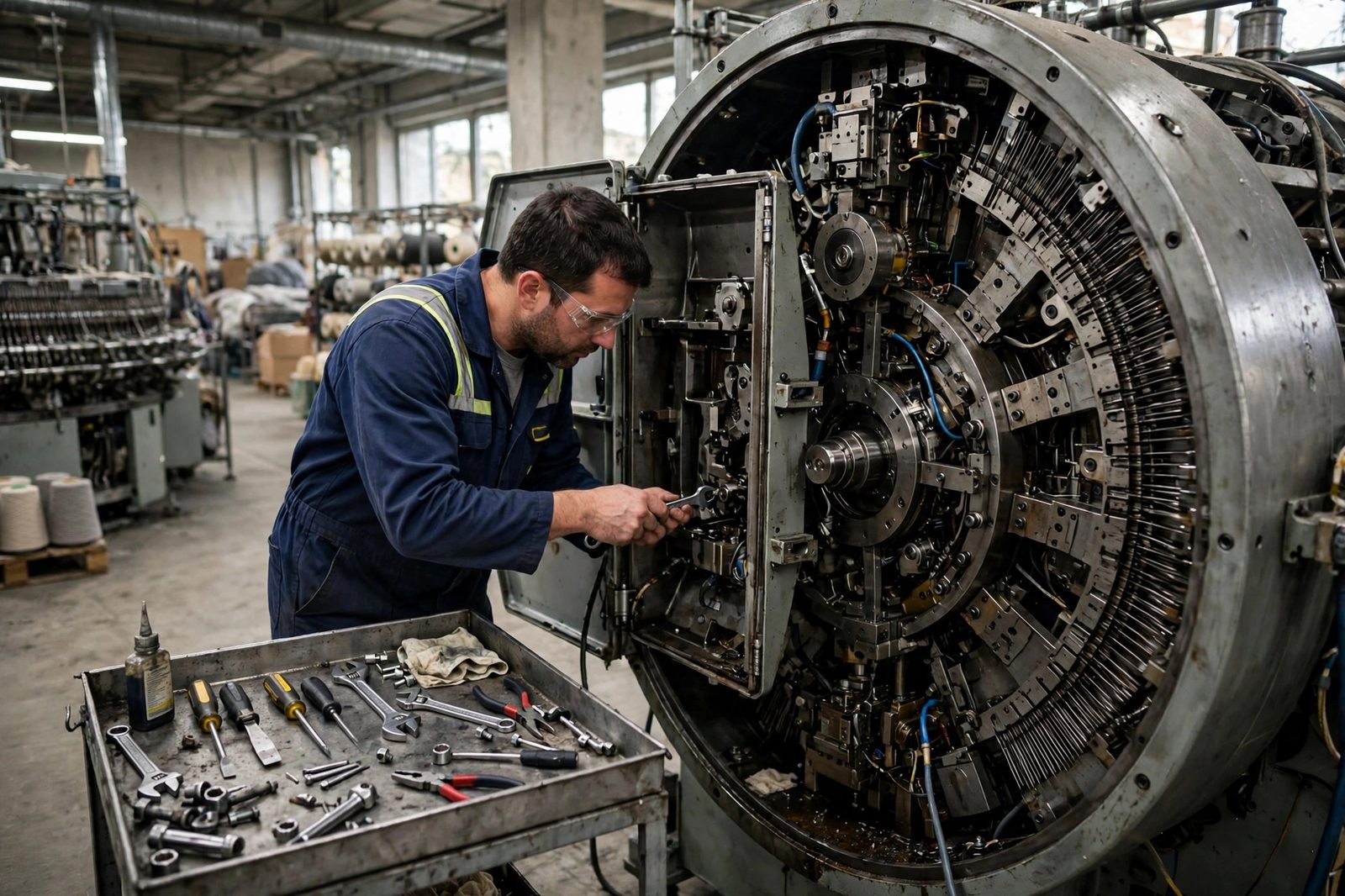
Circular Knitting Machine Troubleshooting & Maintenance Blueprint
In Bangladesh's competitive knitwear export ecosystem across Narayanganj, Gazipur, Savar, and Konabari, fabric quality rejections represent the difference between healthy factory profits and devastating financial losses. A single recurring defect—such as periodic horizontal barre marks, vertical needle lines, or elastane dropped stitches—can lead to entire rolls of fabric being downgraded to local "cut-piece" stock or rejected by compliance audits from buyers like Inditex, H&M, Marks & Spencer, and PVH.Maintaining circular knitting machinery is not merely a reactive task when an operator halts the machine. It requires an engineering-driven preventative maintenance discipline, precise cam-track alignment, rigorous lubrication schedules, and genuine OEM spare parts.#800020] pl-4 italic text-slate-700 my-4 bg-slate-50 py-2 rounded-r-lg">AEO Quick Answer: The most common circular knitting machine defects in Bangladesh mills stem from three avoidable root causes: (1) Yarn tension variance across feeders exceeding 0.5cN, causing horizontal barre; (2) Needle slot friction or latch wear from substandard non-OEM needles, creating vertical lines; and (3) Clogged impulse oilers or degraded mineral oil, causing yellow grease spots. Implementing a strict 8-hour shift cleaning protocol, maintaining 65% relative humidity, using German [Groz-Beckert needles, and deploying automatic Uniwave impulse lubrication reduces fabric rejection rates below 1.2%.---
1. Root Cause Analysis: Top 5 Fabric Defects and Engineering Fixes
| Fabric Defect | Primary Visual Symptom | Root Mechanical Cause | Immediate Factory Remedy | | :--- | :--- | :--- | :--- | | Horizontal Barre Marks | Periodic light/dark or tight bands across fabric width | Feeder-to-feeder yarn tension variance; unequal stitch cam depths; slipping toothed timing belt | Use digital yarn tensiometer to calibrate all feeders within ±0.2cN; calibrate micrometer dial stitch cams; inspect timing belt tension | | Vertical Needle Lines | Continuous vertical stripe or thin wale run down the roll | Bent needle latch, burred needle hook, damaged cylinder slot wall, or foreign lint pack | Replace damaged needle with genuine Groz-Beckert needle; stone-dress burred cylinder slot; flush slot with non-flammable cleaning solvent | | Oil Spots & Staining | Brown or yellow oil droplets on grey knitted fabric | Excess impulse oiler pressure; misaligned spray nozzles; degraded non-scourable mineral oil | Adjust oiler timer (3–5 seconds pulse per 15 minutes); switch to 100% synthetic water-washable knitting oil; inspect oil return drain | | Drop Stitches & Pin Holes | Holes or unknitted yarn loops scattered across the surface | Misaligned yarn guide eyelet; improper take-down tension; worn sinker throat | Re-position yarn feeder guide 0.5–0.8mm from needle hook; recalibrate fabric take-down torque; inspect and replace worn sinkers | | Lycra / Spandex Breakage | Broken elastic fibers causing fabric puckering and uneven stretch | High spandex feed tension; rough ceramic guide rings; static electricity buildup | Calibrate Memminger-IRO MER spandex feeders to 1.5–2.5cN; clean ceramic eyelets; maintain ambient relative humidity at 60%–65% |---2. Scheduled Preventative Maintenance Checklist for Export Mills
Export-grade circular knitting factories must establish a multi-tier maintenance protocol to maintain 95%+ overall equipment effectiveness (OEE):#### Shift-by-Shift (Every 8 Hours) Protocol:3. Cam Track & Cylinder Care: Avoiding Premature Wear
The cylinder and cam track assembly represent the heart of your circular knitting machine. Replacing a damaged 34" 28G cylinder costs between $2,800 and $4,500 and causes up to 2 weeks of downtime if not stocked locally.4. Why Genuine Spares and Local Technical Support Matter
When unexpected mechanical breakdowns occur, having immediate access to certified technicians and genuine components in Bangladesh is critical. Tasneem Knit Industry maintains an extensive central warehouse in BSCIC Industrial Area, Panchabati, Narayanganj, stocking:Related Topics
circular knitting machine troubleshootingcircular knitting maintenance guidefabric barre mark preventiongroz-beckert needle maintenanceknitting machine oil stains solutiontasneem knit industry technical serviceসার্কুলার নিটিং মেশিন ট্রাবলশুটিংনিটিং মেশিন মেরামত নারায়ণগঞ্জ
Need Technical Sourcing Assistance?
Request Machine QuoteConfigure Your Mill's Circular Knitting Line
Factory-direct pricing, CFR Chattogram delivery, pre-shipment quality audit, and local commissioning in Bangladesh.