
Factory Efficiency•2026-10-14•Tasneem Editorial Desk
How to Calculate Circular Knitting Machine Production Capacity: Formula & Worked Example
The exact formula for circular knitting machine output in kg/day, a verified worked example, and practical tips to lift real factory efficiency.
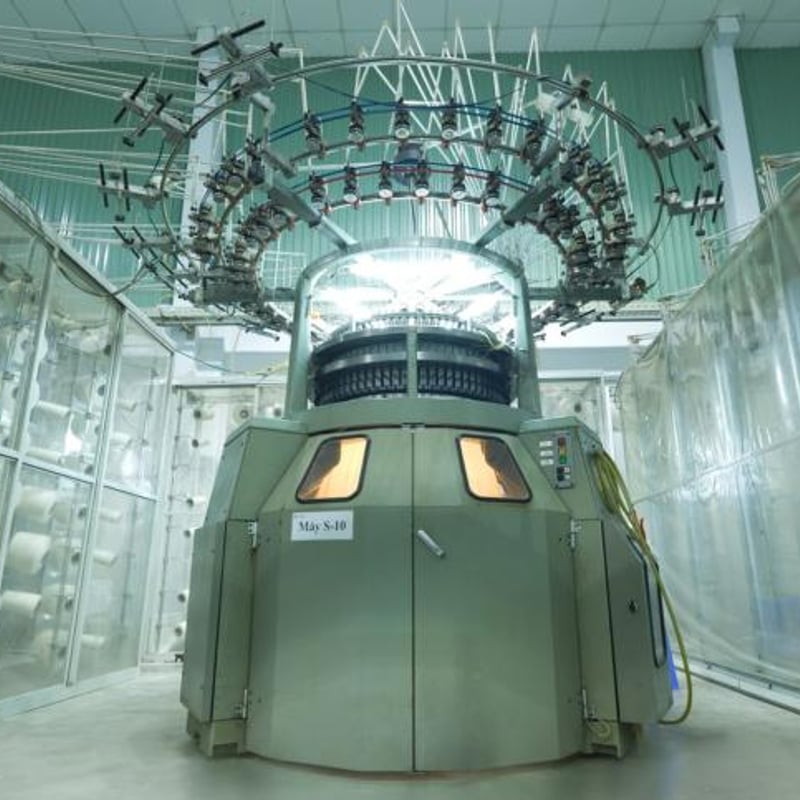
Direct answer: A circular knitting machine's daily output in kilograms equals (π × cylinder diameter × gauge × feeders × stitch length × efficiency × RPM × 60) ÷ (10 × 2.54 × 36 × 840 × yarn count × 2.2046), multiplied by 24 for a full day. For example, a 34-inch, 28-gauge single jersey machine running at 28 RPM produces about 566 kg per day at 85% efficiency.D = cylinder diameter (inches)
G = machine gauge (needles per inch)
F = number of feeders
L = stitch length (mm)
E = efficiency (decimal, e.g. 0.85)
RPM = cylinder revolutions per minute
Ne = yarn English count Multiply the result by 24 for daily output. The logic is simple: total millimetres of yarn knitted per hour are converted to yards (÷ 10 × 2.54 × 36), then to pounds via the yarn count (÷ 840 × Ne), then to kilograms (÷ 2.2046).34-inch diameter, 28 gauge
102 feeders, 2.75 mm stitch length
28 RPM, 85% efficiency, 30 Ne yarn count Step 1 — numerator:
3.1416 × 34 × 28 × 102 × 2.75 × 0.85 × 28 × 60 = 1,197,977,760Step 2 — denominator:
10 × 2.54 × 36 × 840 × 30 × 2.2046 = 50,800,333Step 3 — divide:
1,197,977,760 ÷ 50,800,333 = 23.6 kg/hourStep 4 — daily: 23.6 × 24 = about 566 kg/day.This figure already assumes 85% efficiency — normal stoppages are baked in.RPM: Use the RPM the machine sustains — not the nameplate maximum. Excess RPM raises needle breakage and fabric faults.
Feeders: Count the feeders actually fitted, not the theoretical (diameter × 3).
Stitch length: Unravel 100 stitches, measure with a scale, take the average — never guess.
Yarn count: Use the count verified on a wrap reel balance.
Efficiency: Start with 85% for a new machine, then correct it with 2–3 months of real data. Many Bangladeshi mills run at 65–75% in practice.
GSM relationship: Heavier fabric (higher GSM) on the same machine means fewer metres but the kilogram math already accounts for it — no separate GSM multiplication needed. Correct gauge selection and cylinder diameter choices make this entire calculation stand on solid ground.Assuming 100% efficiency: the most common error. Nobody runs at 100%.
Using catalogue RPM: the catalogue maximum is rarely sustainable.
Guessing stitch length: a 0.1 mm error shifts the daily figure by 3–4%.
Forgetting the ×2 for double jersey: skipping it doubles your apparent output. Scheduled maintenance is the cheapest way to protect efficiency — research shows efficiency losses up to 32% on single jersey machines, much of it from maintenance-related stoppages.
Why Production Capacity Math Matters
Almost every commercial decision in a knitwear factory — buying a machine, promising a delivery date, planning yarn purchase, even servicing a bank loan — rests on one number: how many kilograms of fabric the machine delivers per day. Wrong math means missed shipments, yarn shortages, and lost buyer trust from over-promising. Every factory manager should keep this formula within reach.The Standard Formula (Single Jersey)
The widely used formula in textile literature is:Production/hour (kg) = (π × D × G × F × L × E × RPM × 60) ÷ (10 × 2.54 × 36 × 840 × Ne × 2.2046)Where:Double Jersey and Rib: The ×2 Adjustment
Double jersey and rib machines have two needle beds, so they consume roughly twice the yarn per feeder. Multiply the denominator by 2:Production/hour (double jersey) = (π × D × G × F × L × E × RPM × 60) ÷ (2 × 10 × 2.54 × 36 × 840 × Ne × 2.2046)Worked Example: 34-Inch Single Jersey
Assume this machine specification:What the Research Shows
A study published in Manufacturing Science and Technology (2014) tested a 30-inch × 24-gauge single jersey machine (90 feeders, 2.8 mm stitch length, 30 RPM, 28 Ne, 85% efficiency): theoretical output was 440.88 kg/day, but the factory actually produced only 300 kg/day — a real efficiency of 68%. The same study found a double jersey machine delivering 110 kg/day against a theoretical 149.45 kg/day. The lesson: always reconcile paper math with measured shop-floor efficiency.The 6 Inputs You Must Get Right
Common Mistakes That Inflate Your Numbers
Quick Estimation Shortcut
For an urgent quotation, a rough rule: a 30-inch single jersey machine (24–28 gauge, 28–30 Ne yarn) typically delivers 300–450 kg/day; a double jersey of the same diameter delivers 100–160 kg/day. Always run the full formula before making a final commitment.To cross-check against energy cost, see our power consumption guide — once you know kWh per kg produced, true profitability becomes clear.FAQs
How do I calculate output for one 8-hour shift?
Multiply the hourly figure by 8. In the example above: 23.6 × 8 = about 189 kg per shift.Is the formula the same for all fabric types?
The structure is the same, but for double jersey, rib, and interlock multiply the denominator by 2. For jacquard or stripers, assume slightly lower efficiency depending on the pattern.How do I measure efficiency?
Weigh actual production for a week, divide by the theoretical figure, and multiply by 100. Below 70%, hunt down stoppage causes — usually yarn breaks, needle breakage, or unplanned style changes.Does GSM enter the formula directly?
No. The formula derives kilograms from yarn weight, so GSM is not a separate input. But for a given count, higher GSM means heavier fabric — adjust stitch length to the buyer's requirement.How does this help when buying a new machine?
Plug both models' specifications into the formula, compare daily kilograms, then divide the investment cost by output per kg. That reveals which machine is profitable per kilogram — not merely which is cheaper to buy.Related Topics
production capacitycircular knitting machineউৎপাদন ক্ষমতাfactory efficiencyknitting calculation
Need Technical Sourcing Assistance?
Request Machine QuoteConfigure Your Mill's Circular Knitting Line
Factory-direct pricing, CFR Chattogram delivery, pre-shipment quality audit, and local commissioning in Bangladesh.